Electric vehicles are becoming a common sight on Houston roads. More drivers now want the ease of charging at home instead of waiting at public charging stations. If you are searching for ev charger installation near you, it helps to know the difference between Level 1 and Level 2 chargers before deciding. Each option has its own benefits, charging speed, and power needs. The right choice depends on your driving habits, home electrical system, and future plans. Understanding these differences will help you invest in a charging solution that is safe, reliable, and built to meet your daily needs.
Understanding EV Chargers
Every electric vehicle needs a charger to keep its battery ready for the road. Home charging is the easiest way to power your vehicle because it lets you charge overnight while your car is parked. The two most common choices are Level 1 and Level 2 chargers.
A Level 1 charger comes with most electric vehicles. It plugs into a standard 120-volt outlet that is already found in most homes. This makes it the simplest option because it does not require special equipment. However, charging is slow and may not fit the needs of drivers who travel long distances every day.
A Level 2 charger uses a 240-volt circuit. It charges much faster than a Level 1 unit and is the preferred choice for many homeowners. A licensed electrician should install this type of charger to ensure safety and proper performance.
Level 2 Charger Installation: Why More Homeowners Choose It
Many Houston homeowners choose a Level 2 charger because it saves time and offers greater convenience. A faster charging system means your vehicle is ready every morning without long waiting periods.
A typical Level 2 charger can add many more miles of driving range each hour than a Level 1 charger. This makes it ideal for busy families, commuters, and households with more than one electric vehicle.
The installation process also allows an electrician to inspect your home’s electrical system. This helps confirm that your wiring and circuits can safely support the new equipment.
Level 1 vs. Level 2 Charging
The biggest difference between these chargers is charging speed. A Level 1 charger may take more than a full day to charge an empty battery. A Level 2 charger can often complete the same job overnight.
Here are a few key differences:
- Level 1 Charger
- Uses a standard 120-volt outlet
- Slower charging speed
- Good for drivers with short daily trips
- No professional installation in most cases
- Level 2 Charger
- Uses a dedicated 240-volt circuit
- Charges much faster
- Best for daily commuters and families
- Requires professional installation
While a Level 1 charger works well for light use, many homeowners find that upgrading to a Level 2 charger provides a much better charging experience over time.
Is Your Home Ready for an EV Charger?
Before installing a charger, it is important to check your home’s electrical capacity. Older homes may not have enough available power to support a new charging station.
Some homes may need electrical panel replacement in Houston before installation can begin. An electrical panel controls the flow of electricity throughout your home. If it is outdated or already operating near its limit, adding an EV charger may overload the system.
A licensed electrician can inspect the panel, calculate your home’s electrical load, and recommend the safest solution. This step protects both your vehicle and your home’s electrical system while preparing your property for future energy needs.
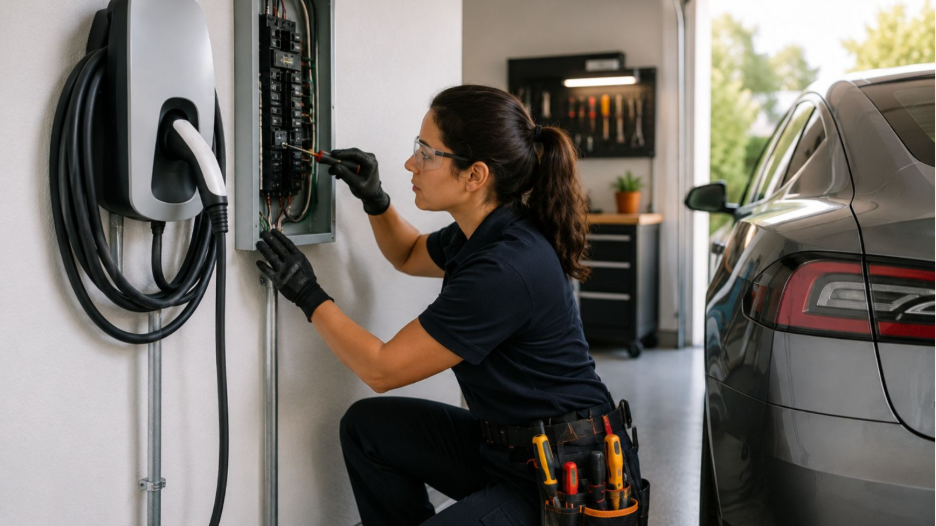
Home Electric Car Charger Installation: What to Expect
Once your home’s electrical system is ready, the installation process is usually simple. A licensed electrician will inspect the best location for the charger, review the electrical layout, and install a dedicated circuit if needed. The charger is then mounted, connected, and tested to ensure it works safely.
Most residential installations can be completed within a single day, depending on the home’s wiring and the distance between the electrical panel and the charging location. A professional installation also ensures the work meets local electrical codes and gives you peace of mind every time you charge your vehicle.
How Much Does EV Charger Installation Cost?
The cost of installing a home EV charger depends on several factors. The type of charger, the condition of your existing electrical system, and the complexity of the installation all affect the final price.
If your electrical panel has enough capacity, the installation is often straightforward. However, if upgrades are needed, the project cost may increase because additional electrical work is required. While the upfront investment may seem significant, many homeowners find that charging at home saves both time and money over the life of their vehicle.
A professional electrician can provide a detailed estimate after inspecting your home’s electrical system and discussing your charging needs.
Why Hire a Licensed Electrician?
Installing an EV charger is more than mounting equipment on a wall. It involves working with high-voltage electrical systems that must meet strict safety standards.
Hiring a licensed electrician helps ensure:
- The charger is installed safely.
- The electrical system can handle the added load.
- Local building and electrical codes are followed.
- The charger performs efficiently for years.
- Your manufacturer’s warranty remains protected.
Professional installation also reduces the risk of electrical problems that could damage your charger or vehicle.
Choose the Right Charging Solution for Your Home
Every homeowner has different driving habits and charging needs. Some people only drive a few miles each day, while others rely on their electric vehicle for long daily commutes. Choosing the right charger depends on how often you drive, how quickly you need to recharge, and whether your home’s electrical system can support the equipment.
Speaking with a qualified electrician before purchasing a charger helps you avoid unexpected costs and ensures you invest in a solution that fits your home today and in the future.
Trust JN’L Electric for Your EV Charging Needs
If you are looking for ev charger installation near you, JN’L Electric is ready to help homeowners across Houston with safe, reliable, and professional electrical services. Our experienced electricians install EV charging stations with precision while making sure your home’s electrical system is prepared for long-term performance. Whether you need a new charging station or advice about electrical upgrades, our team delivers dependable workmanship and excellent customer service. Contact JN’L Electric today to schedule your consultation and enjoy the convenience of charging your electric vehicle safely at home.
